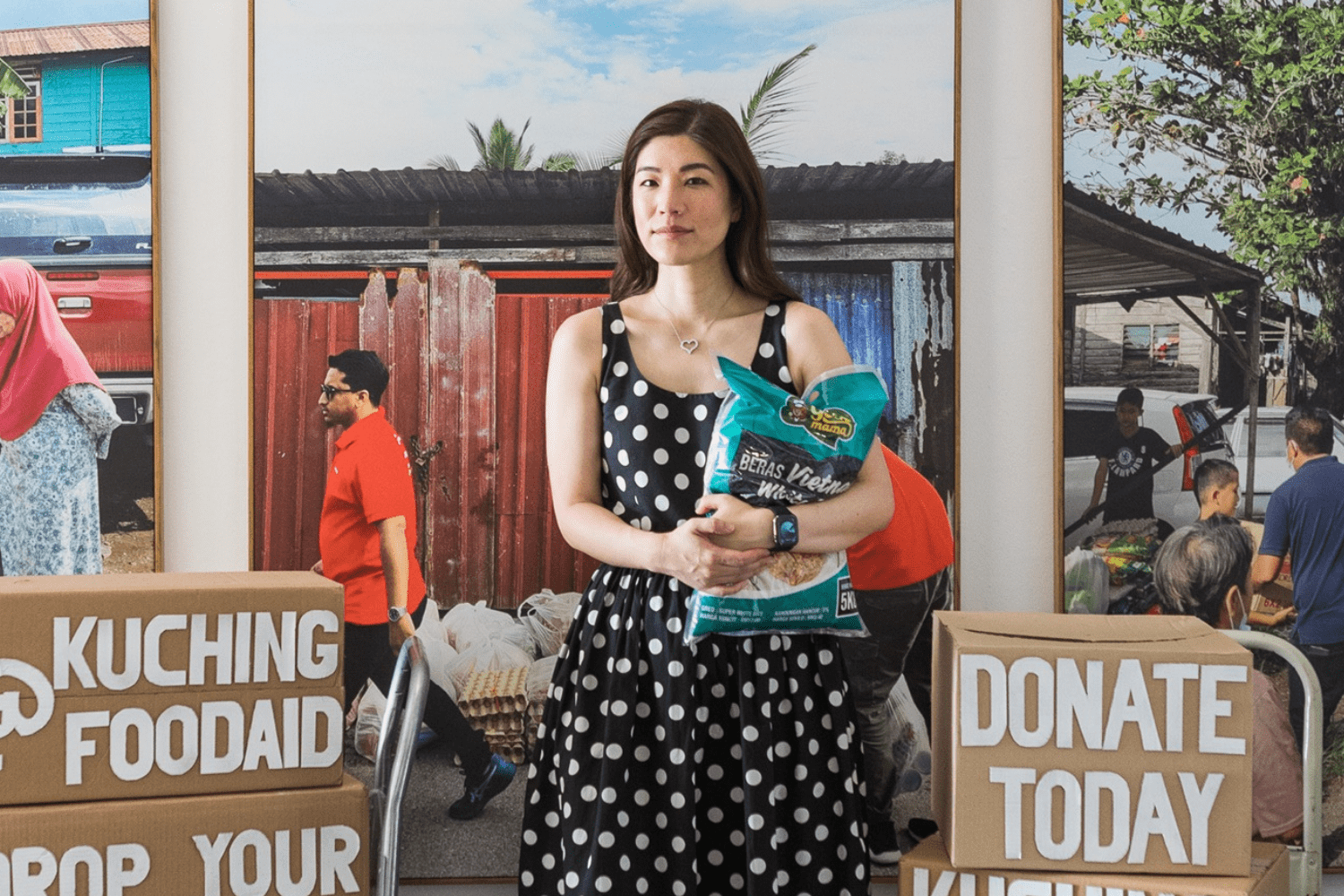
Shentel Lee holding rice at a Kuching Food Aid donation drive, Sarawak Malaysia

Some people talk about purpose. Shentel Lee built an NGO, a community centre and a food bank from her phone. Beauticate's Culture Editor - designer, entrepreneur and one of Tatler Asia's Most Influential women - writes on why giving back stopped being optional, and what it actually looks like when the cameras aren't rolling.

The word "giving" is complicated when your job is basically to take.

I make things. I sell things. And I quietly siphon people’s most precious resource: their attention. When a school mum tells me she saw my latest Reel, my reflex is still to wince. I know I overshare. I know I can be a lot. I am also comfortable admitting I have survived a full mental breakdown from burnout, that it takes daily work to put my mental health first, and that I still neglect myself enough to edge back towards what I call the black hole.

Somewhere along the way, though, this noisy little corner of the internet stopped being just a shop window. It became the engine room for the work I am proudest of. The space you step into when you scroll my feed now helps keep families fed in Kuching. If you are here, you are already part of it.

How it started: a pandemic, a message, and a snap decision

Five years ago, deep in the first wave of COVID, I opened a message on Instagram asking for help. Families in Kuching could not access basic things like masks and hand sanitiser. We were already in grief after my father-in-law had passed away. I could easily have scrolled past.


I did not.


Something snapped into focus. It felt like being yanked out of quicksand. I knew suppliers, I knew who to call, and I knew there were people in my community who would help if I gave them a way to do it. Daily updates from my phone reached people stuck at home who desperately wanted to do something but did not know where to start. They donated. They shared. And I realised I could use the space I had built as a direct line to give back.

That first mission changed everything.

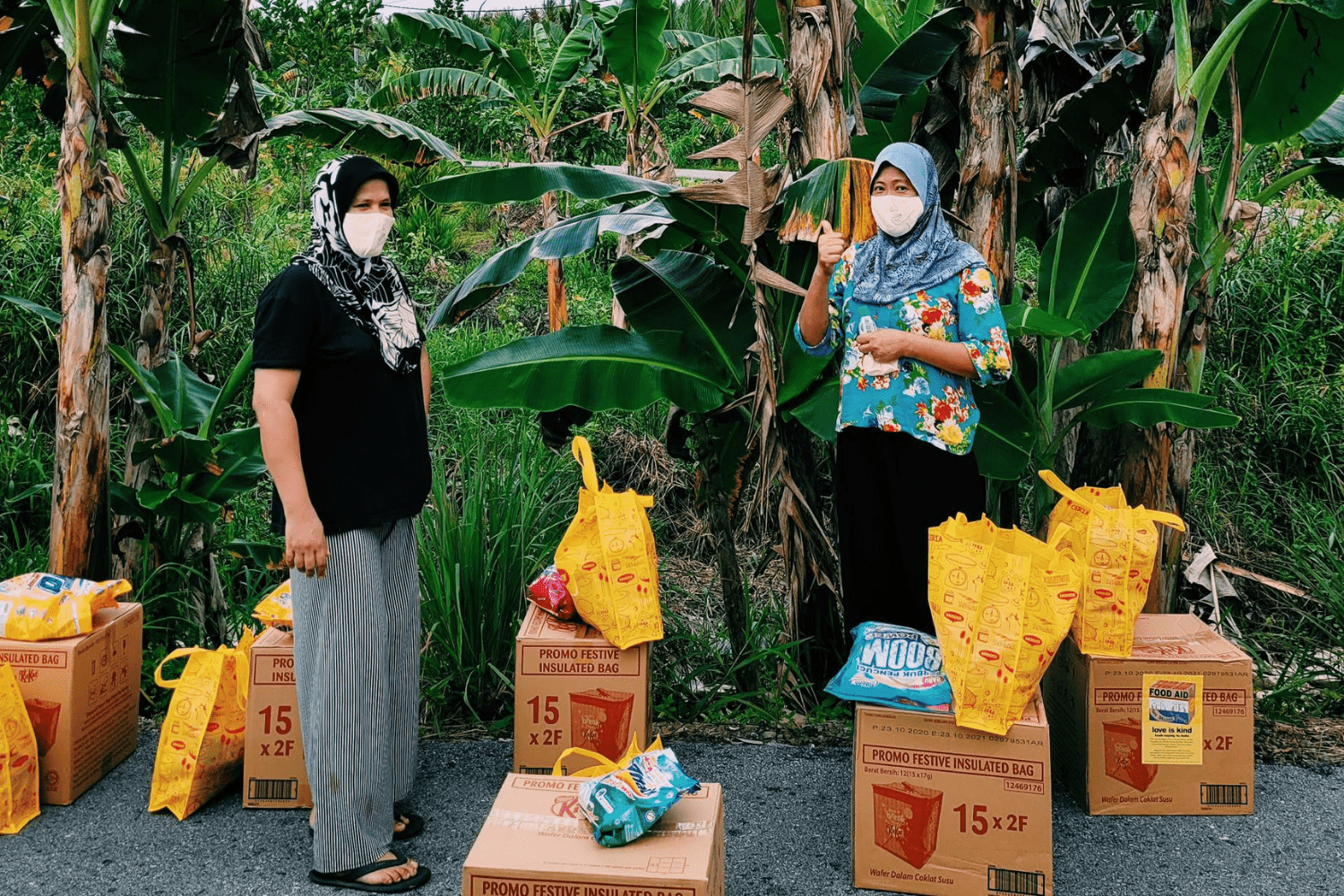
Kuching Aid Food Donations in Orange Bags

What Kuching Food Aid actually looks like (it's not glamorous)

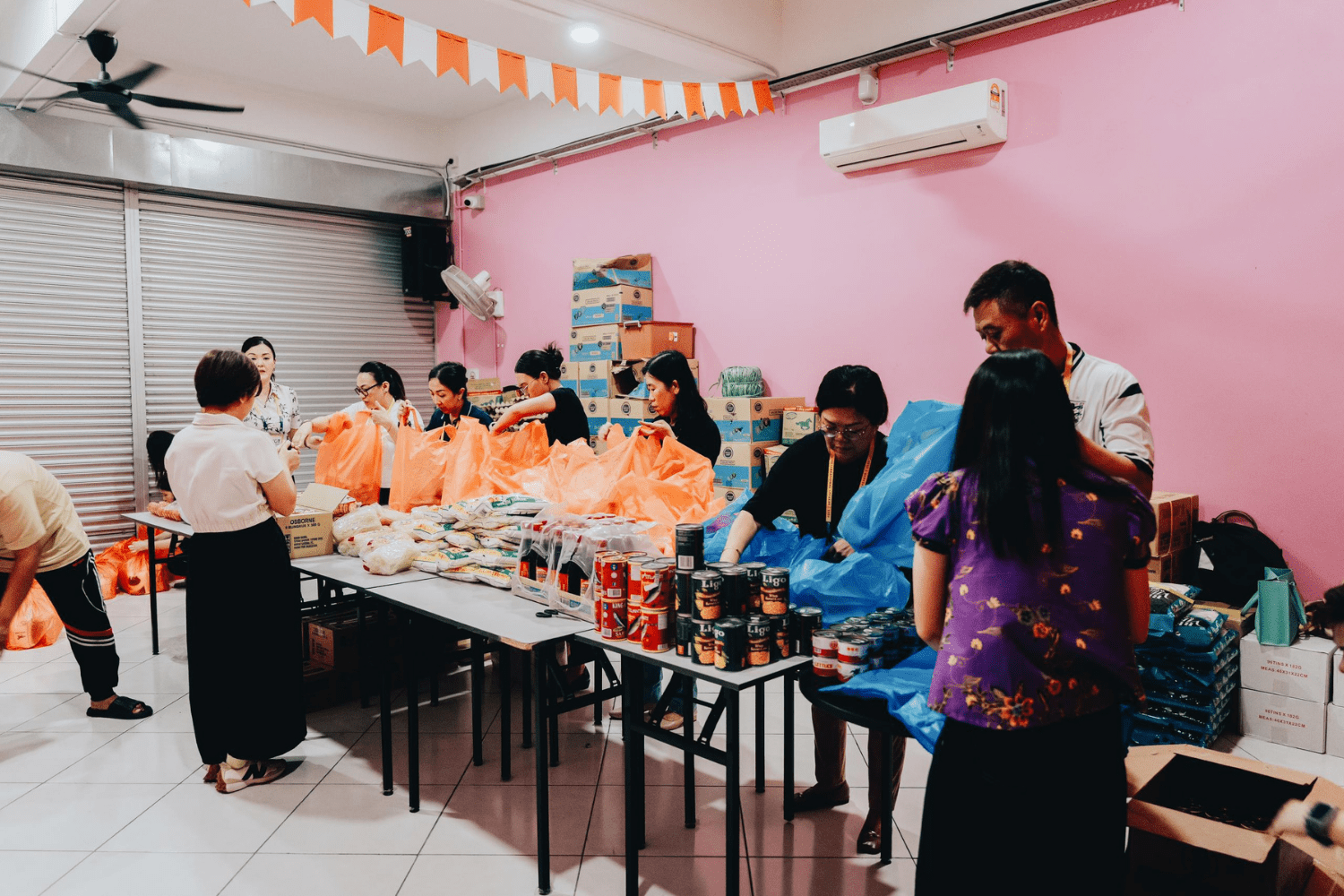
Today I am a full-time volunteer at Kuching Food Aid, an NGO I accidentally founded because donors believed in the transparency of what I was sharing. We are not traditional. Our meetings happen in WhatsApp chats and video calls. Volunteers send photos, numbers and names through their phones. Donors can message me directly and get every image and piece of data they need, without sitting through long, expensive meetings.


We have no admin or logistics fees. Every ringgit goes directly to food aid.


My service does not look like what people might imagine. It is spreadsheets and invoices, coordinating food orders, chasing name lists and photos, updating donors, and tracking expenses from my laptop and phone. It is not photogenic. But it gives me a depth of purpose I cannot find anywhere else.


In 2023, my husband Dato Bobby Ting and I opened the Kuching Community Social Support Centre in the heart of the city, bringing NGOs and government welfare agencies together under one roof. More than 1,000 patrons now come through monthly. It is, I think, the most practical thing I have ever built.

The tools that keep me going

The things that pull me back from the edge are almost embarrassingly simple. Sleep (a wise friend once reminded me it is free). Moving my body every day, even if it is just a walk. And then there is the one that genuinely surprised me: being part of a community that gives back. Not a vague notion of charity, but specific, local, boots-on-the-ground giving that keeps me accountable to something bigger than my own to-do list.


Compassion fatigue is real. Some cases stay with you and can be emotionally heavy. What helps is having a committee where we can talk openly about the emotional side, not just the logistics. That kind of community around the work is what makes it sustainable.

People at Kuching Aid Food Donation Packing

How to know if a charity is worth your trust

This is the question I get asked most. My best advice: do your homework. Look the organisation up. Visit if you can. Meet the people doing the work on the ground and ask as many questions as you like.


I believe in small, grassroots organisations with clear, focused goals and minimal red tape. Fundraising for a wheelchair, for a family in medical crisis, for a specific community need you can actually see. Those are the ones where your money lands with the most impact.


There are, unfortunately, bad actors out there. Be especially careful with random posts on social media asking for money. Trust your gut. If something feels off, you are allowed to say no. The need in the world is endless, so you will never run out of places to help. My top tip: listen. To the stories, to the people, and to your own instincts.

Where to start (even if you have nothing to spare)

When people tell me they want to give back but have no idea where to begin, I always say the same thing: start close to home.


What are you good at? What do you have that others might need? It might be money. It might just as easily be time, organisation, or a skill you take for granted. Look up your nearest food bank. Donate something from your pantry. Go to your local community centre and quietly ask if there is someone who could use a bit of help.


You do not have to launch a foundation or have thousands of followers to make a difference. You just have to start small, pay attention, and be willing to scratch a little deeper when you have the capacity.


If anything in my story resonates, let it be this: giving back will ask something of you. But it will also give you a clarity and a grounding that are very hard to find anywhere else.

Shentel Lee holding rice at a Kuching Food Aid donation drive, Sarawak Malaysia

Shentel Lee is a designer, entrepreneur and philanthropist based between Sydney and Kuching. She is the co-founder of accessories brands Sereni & Shentel and Bowerhaus, and the founder of Kuching Food Aid, East Malaysia’s only privately founded food bank. In 2023, she opened the Kuching Community Social Support Centre, a first-of-its-kind space connecting NGOs and government welfare agencies under one roof. She has been named to Tatler Asia’s Most Influential list and recognised as a Gen-T honouree. She is also Beauticate’s Culture Editor.

Comment (0)