
Hair loss is deeply personal. And for many of us, it doesn’t happen just once. Sigourney shares her (and her husband Damien's) experience with thinning hair and unpacks whether red light therapy can help, what the data shows, and why realistic expectations matter.
I first experienced it after my babies were born – that slow, confronting postpartum shedding that turns every shower into a small emotional reckoning. Then again during periods of intense stress, when lifting clumps of hair from the drain felt genuinely soul-destroying. I tried everything: shampoos, sprays, supplements, scalp massages, even prayer.
If you've been there, you know it's not vanity. It's grief.
Hair carries identity, health and confidence. Watching it thin can feel quietly devastating.
My husband Damien's experience has been different, but just as familiar. His hair has been gradually thinning for years. Nothing dramatic. Just that slow, creeping change many men notice and rarely talk about.
That uncertainty is what makes hair loss so unsettling. You don't wake up bald. You just wake up one day more aware.
Why Hair Loss Rarely Has One Clear Cause
Hair thinning can be driven by hormones, genetics, stress, inflammation, postpartum shifts, perimenopause, or simple ageing. Often, it's a mix of all of the above – which is why single-solution answers rarely feel satisfying.
Most people searching for hair loss solutions are looking for the same thing: something that helps, something consistent, and something that doesn't come with dramatic side effects or unrealistic promises.
Why We Decided to Try Red Light Therapy for Hair Thinning
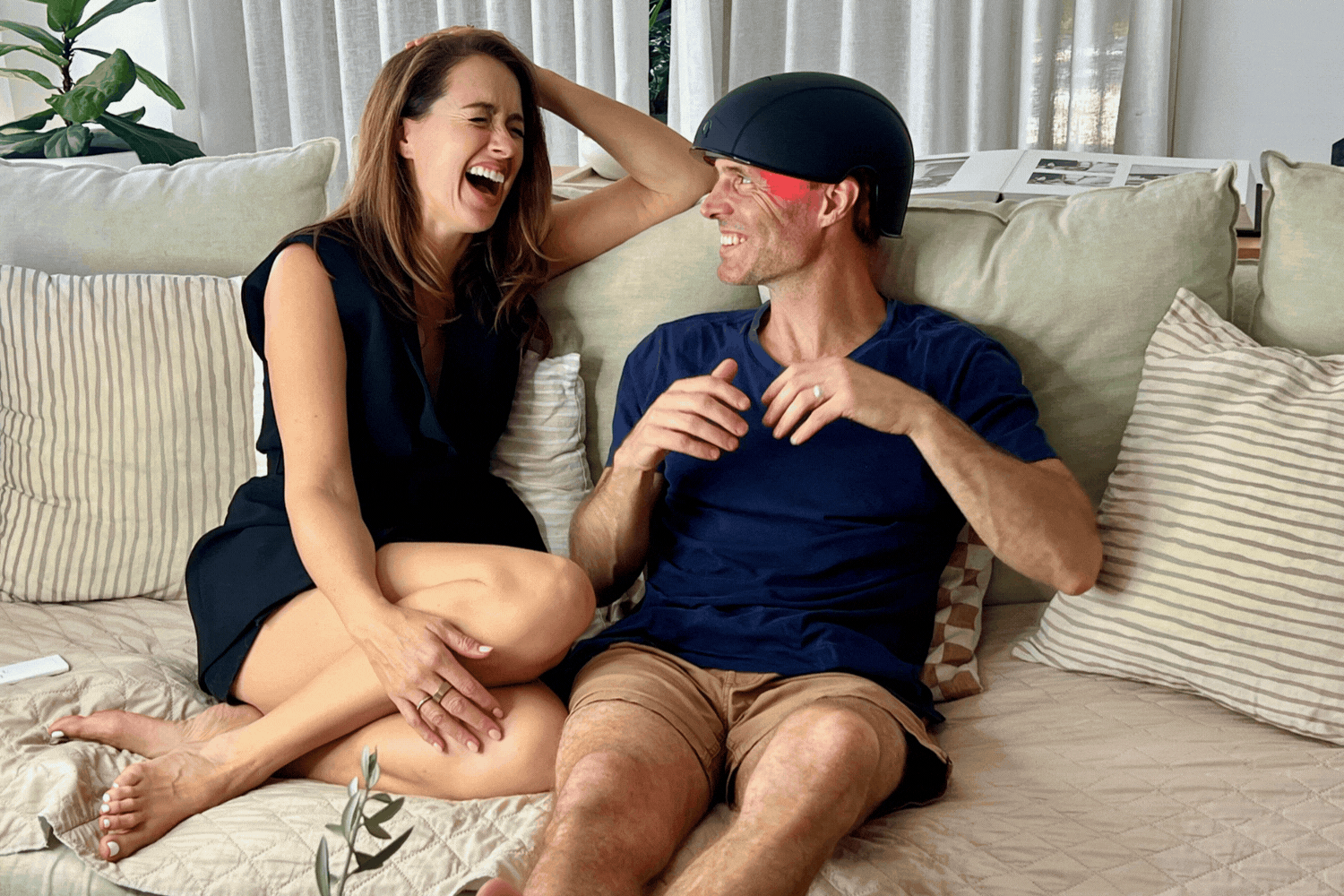
The Qure Skincare Q-Renew LLLT Helmet landed on my radar at a time when red light therapy had already become part of our household routine.
I already know and trust Qure as a brand – we've previously explored their LED technology across skincare and at-home treatments, including their LED Face Mask and Neck & Décolletage system. So instead of filing this under interesting but unnecessary, we had a proper conversation about whether it was worth testing in real life.
I didn't need it urgently – though who doesn't want thicker hair? Damien, on the other hand, felt like the perfect guinea pig. That felt honest.
So rather than chasing miracle cures or overhauling routines, we decided to add one variable and observe what happened. Calmly. Transparently. With realistic expectations.
Why Red Light Therapy Entered the Hair Conversation
Red light therapy has quietly become part of modern wellness routines. It now shows up in skincare, recovery tools and longevity-focused tech – a shift we've explored recently through wearable health devices and nervous system regulation.
Its move to the scalp feels less like a gimmick and more like a natural extension of that thinking.
Hair follicles are metabolically active. They're sensitive to inflammation, circulation and hormonal signals. If light-based therapies can support skin and muscle recovery, it's reasonable to ask whether they may also support scalp health.
But curiosity alone wasn't enough. The data had to stack up.
What the User Study Actually Looked At
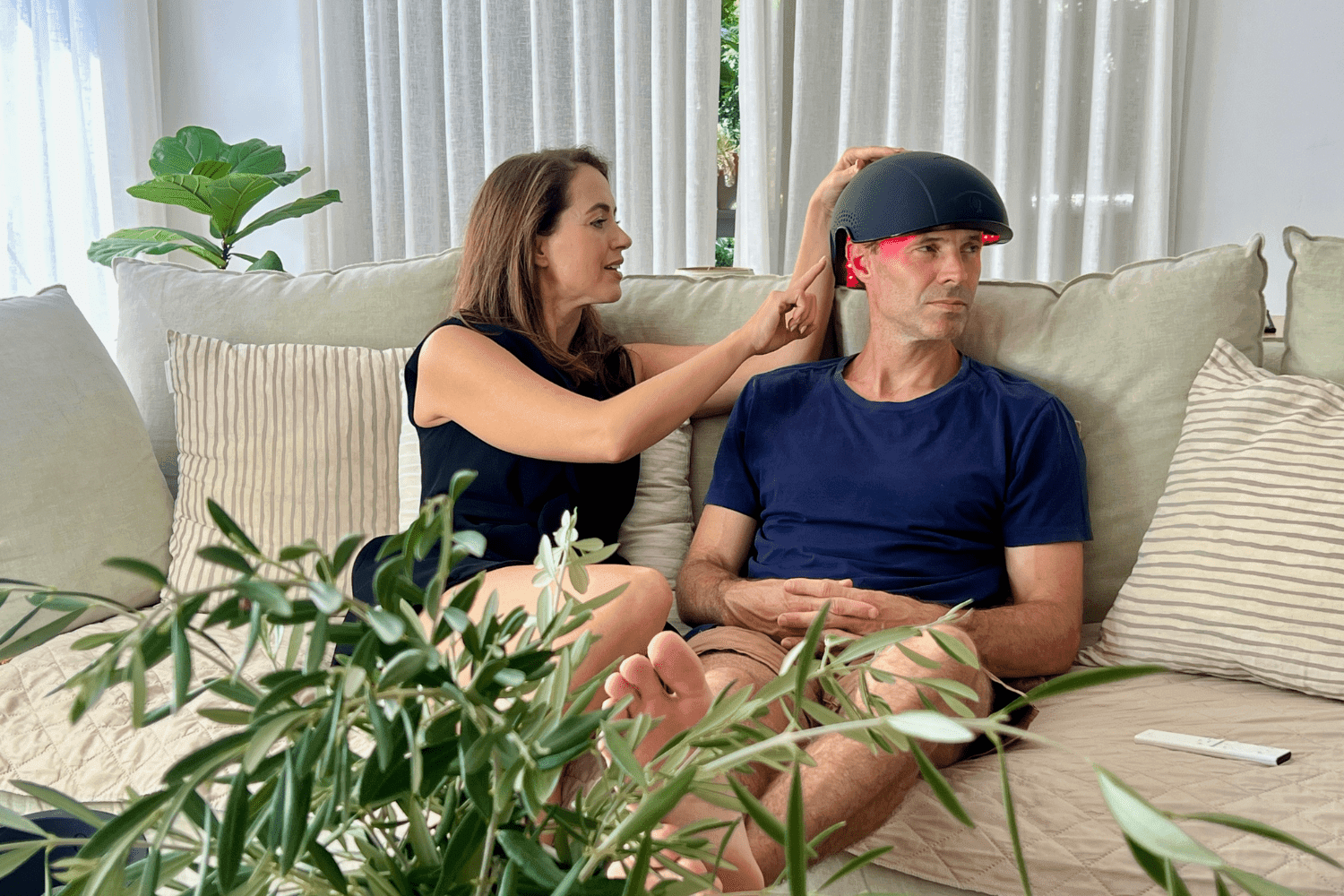
The data behind Qure's helmet comes from a 16-week clinical user study, where men and women with mild to moderate pattern hair thinning used the helmet at home.
Hair was measured at baseline and again after consistent use, using clinical imaging tools including trichoscopy and phototrichogram analysis. No adverse events were reported.
It's important to be clear about one thing upfront: this wasn't a placebo-controlled trial. There was no sham helmet. Which means we can't claim definitive cause and effect.
But it was a real-world, at-home study using objective measurement tools – and the outcomes were specific enough to be worth paying attention to.
What the Data Showed (In Plain English)
This isn't a story about suddenly sprouting new hair where none existed before.
Hair count and density only increased slightly and not enough to be considered statistically significant.
Where it did get interesting was hair thickness.
After 16 weeks:
- Average hair strand width increased by around 9–12%
- Total hair thickness across the scalp increased
- 100% of participants experienced visibly thicker-looking hair strands
- 90% showed improvements in hair thickness and density
- 90% reported fuller-looking hair
- 90% saw an increase in hairs in the active growth phase
- 82% said their hair appeared thicker
- 78% said it looked denser
- 75% noticed less shedding
Researchers also measured a faster hair growth rate over shorter time windows. Both investigators and participants reported improvements in fullness, overall hair quality and scalp health.
Think of it like fertiliser for existing grass. It can help thin patches thicken. It won't grow grass where the soil is gone.
Hair carries identity, health and confidence. Watching it thin can feel quietly devastating.
Lasers vs LEDs: Why This Matters
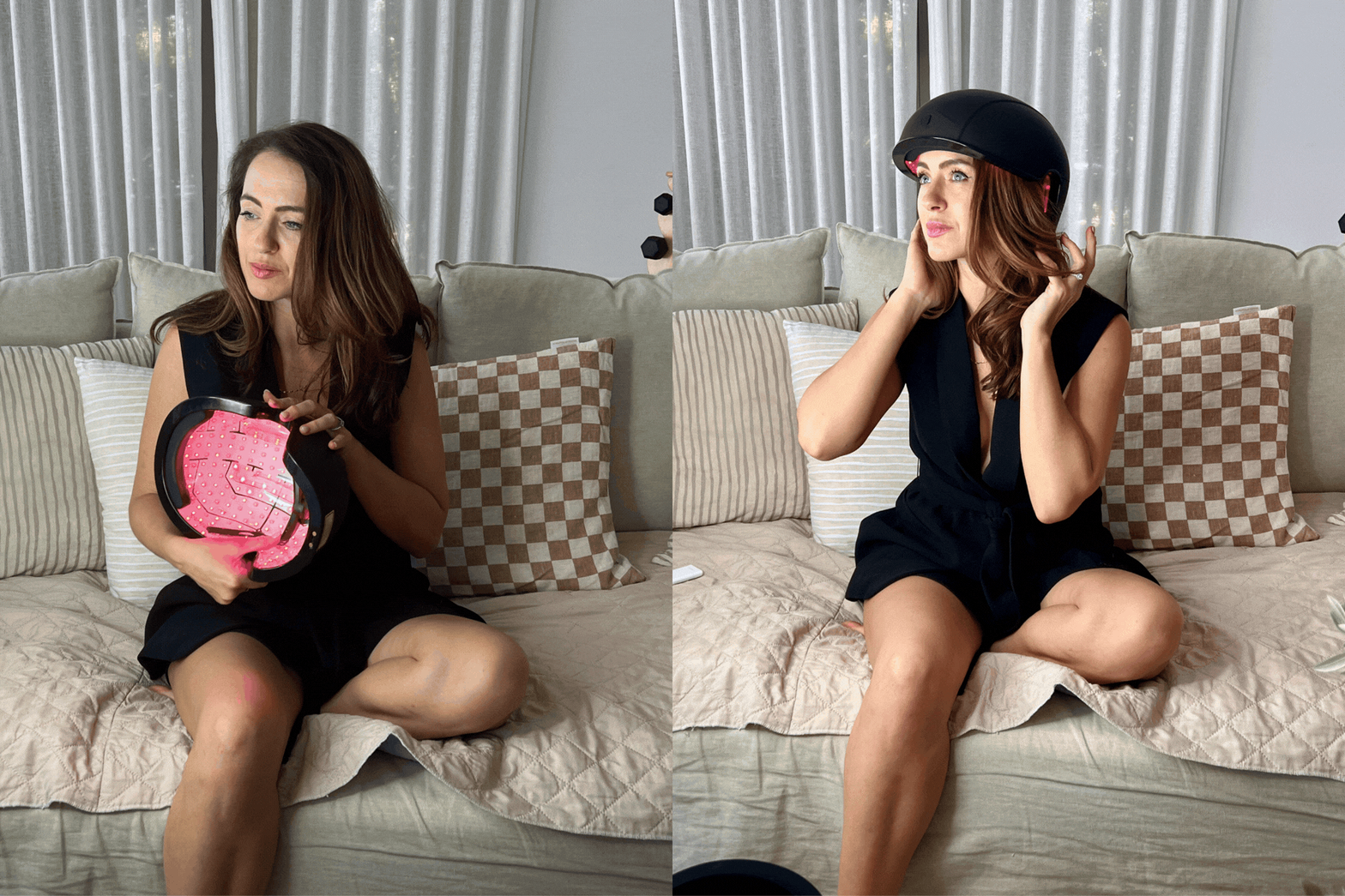
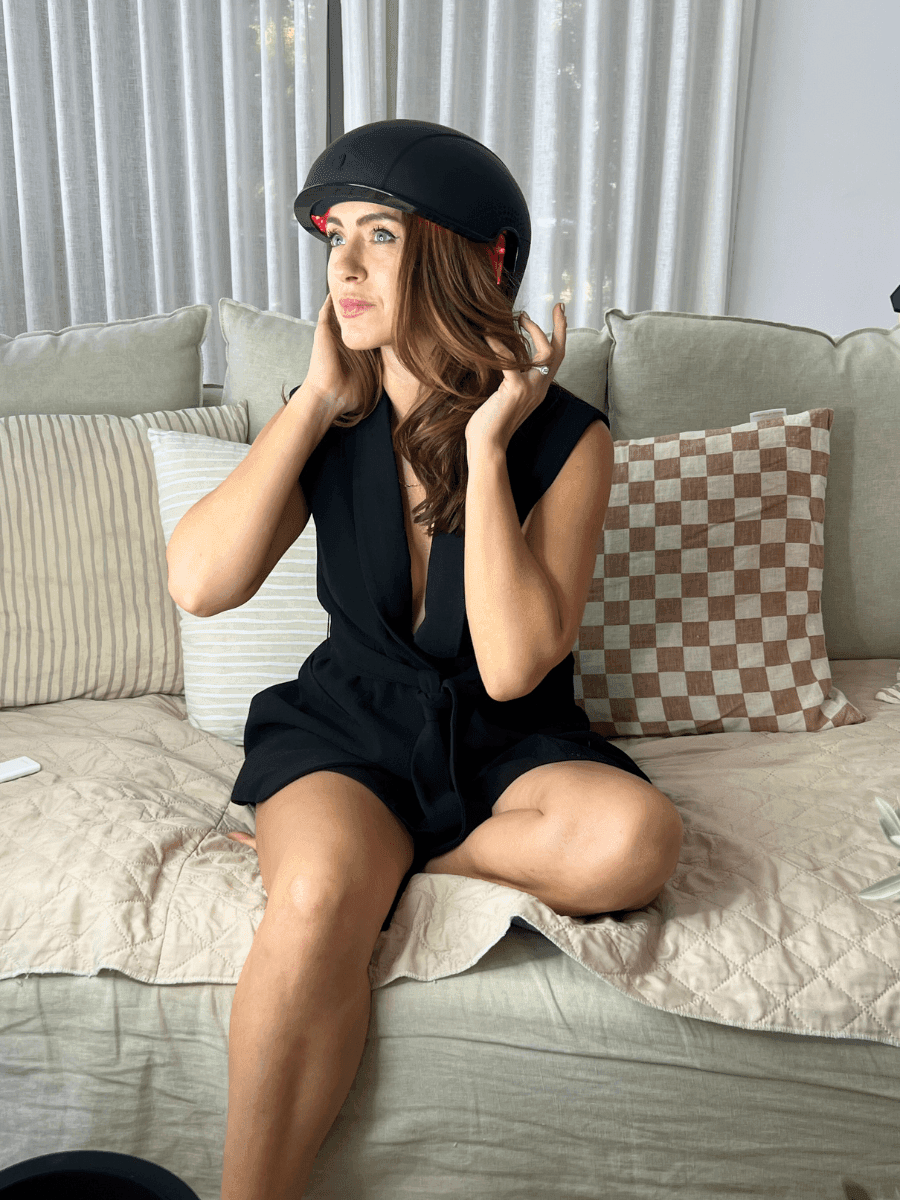
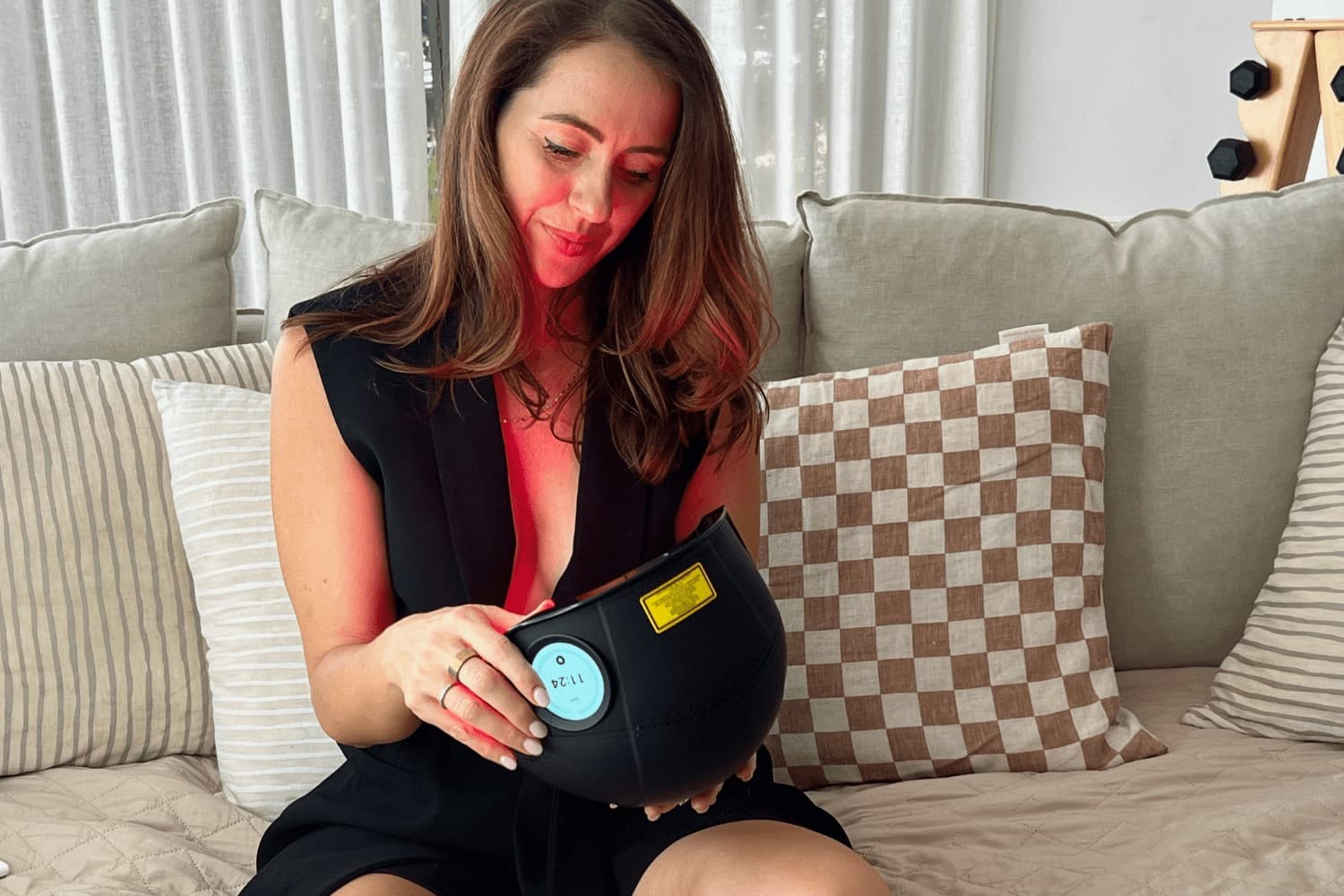
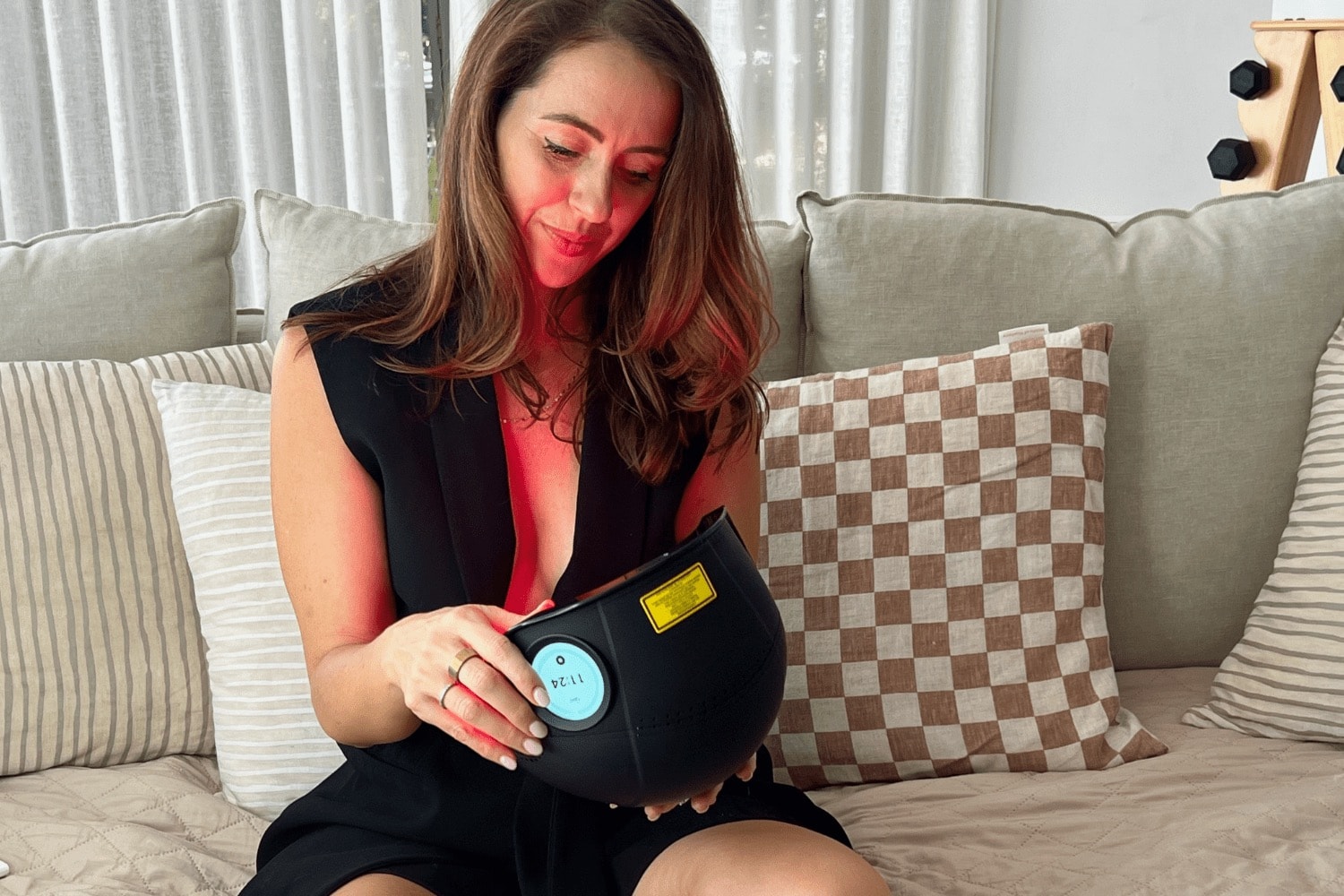
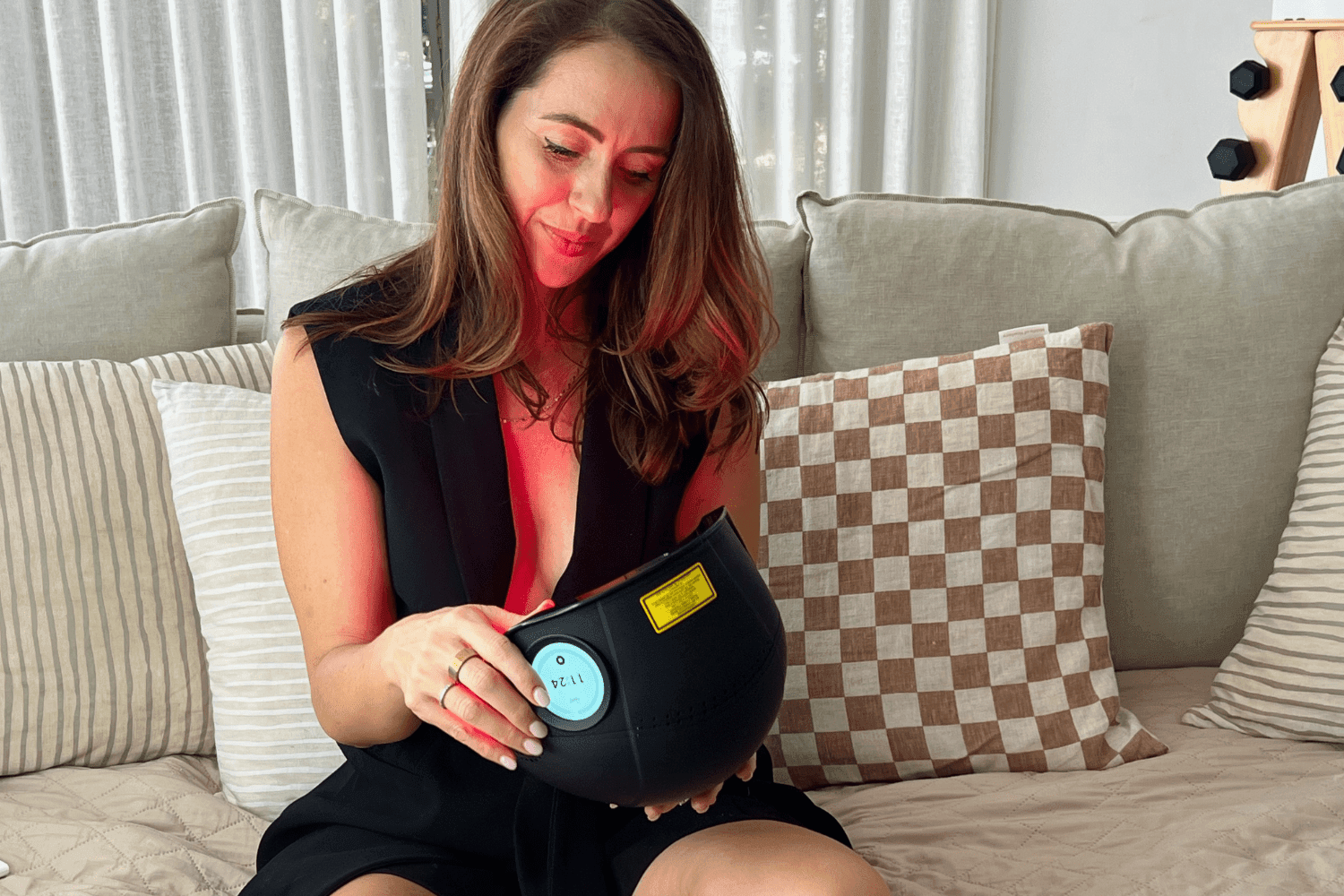
Qure Q-Renew helmet with red LED light for the scalp
Hair devices often blur technical distinctions. This one doesn't.
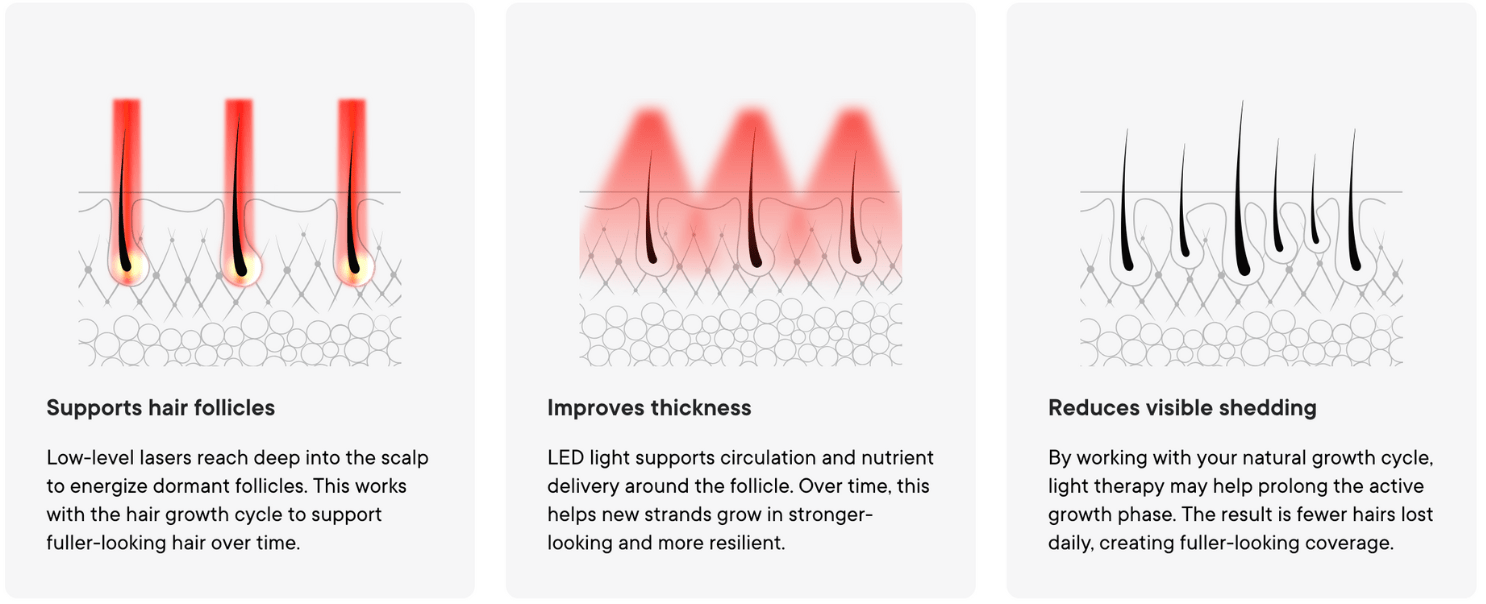
The Q-Renew helmet combines red LED light therapy with low-level laser therapy (LLLT).
In simple terms:
- LEDs deliver dispersed light across a broader area, supporting overall scalp health and circulation
- Lasers deliver focused, coherent light that penetrates more deeply and targets follicles more precisely
Q-Renew uses 630nm, 660nm and 680nm red LEDs, alongside 655nm lasers – wavelengths commonly studied in low-level laser therapy for hair thinning.
It's not about intensity. It's about consistency, coverage and tolerability over time.
The helmet is listed on the Australian Register of Therapeutic Goods (ARTG) as a Class IIa medical device, meaning it has been evaluated for safety, quality and performance in Australia.
Why This Helmet Worked for Real-Life Testing
We chose this device because it was realistic to use.
- Fully wireless – no cords or wall plugs
- Built-in safety sensors that pause treatment if removed
- Adjustable inner wheel for comfort
- Sessions take 12 minutes, a few times a week
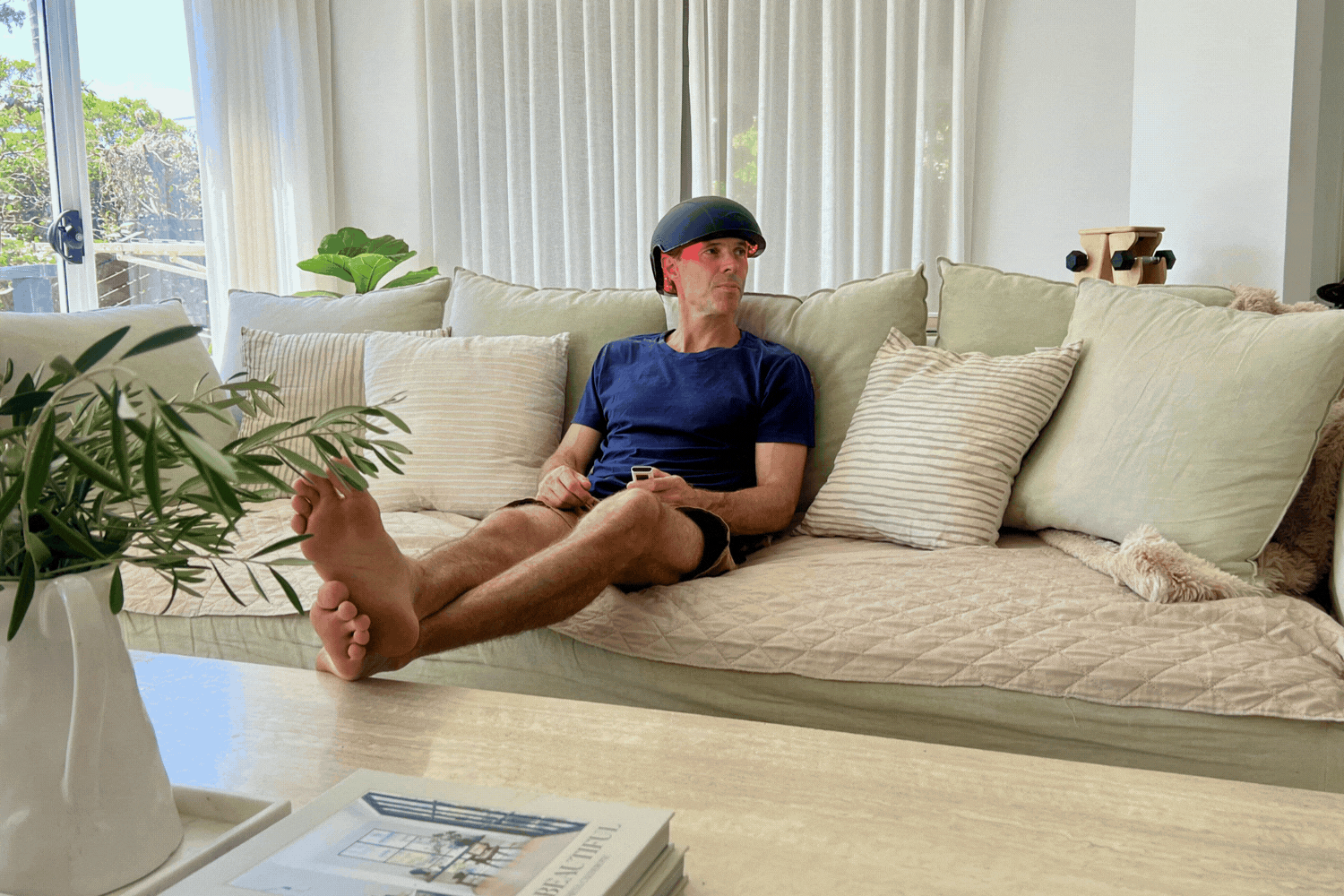
It now lives on our coffee table – not as a gimmick, but as a visual reminder to use it while watching TV. It's also sparked some interesting conversations from guests.
Damien as a Real-World Test Case
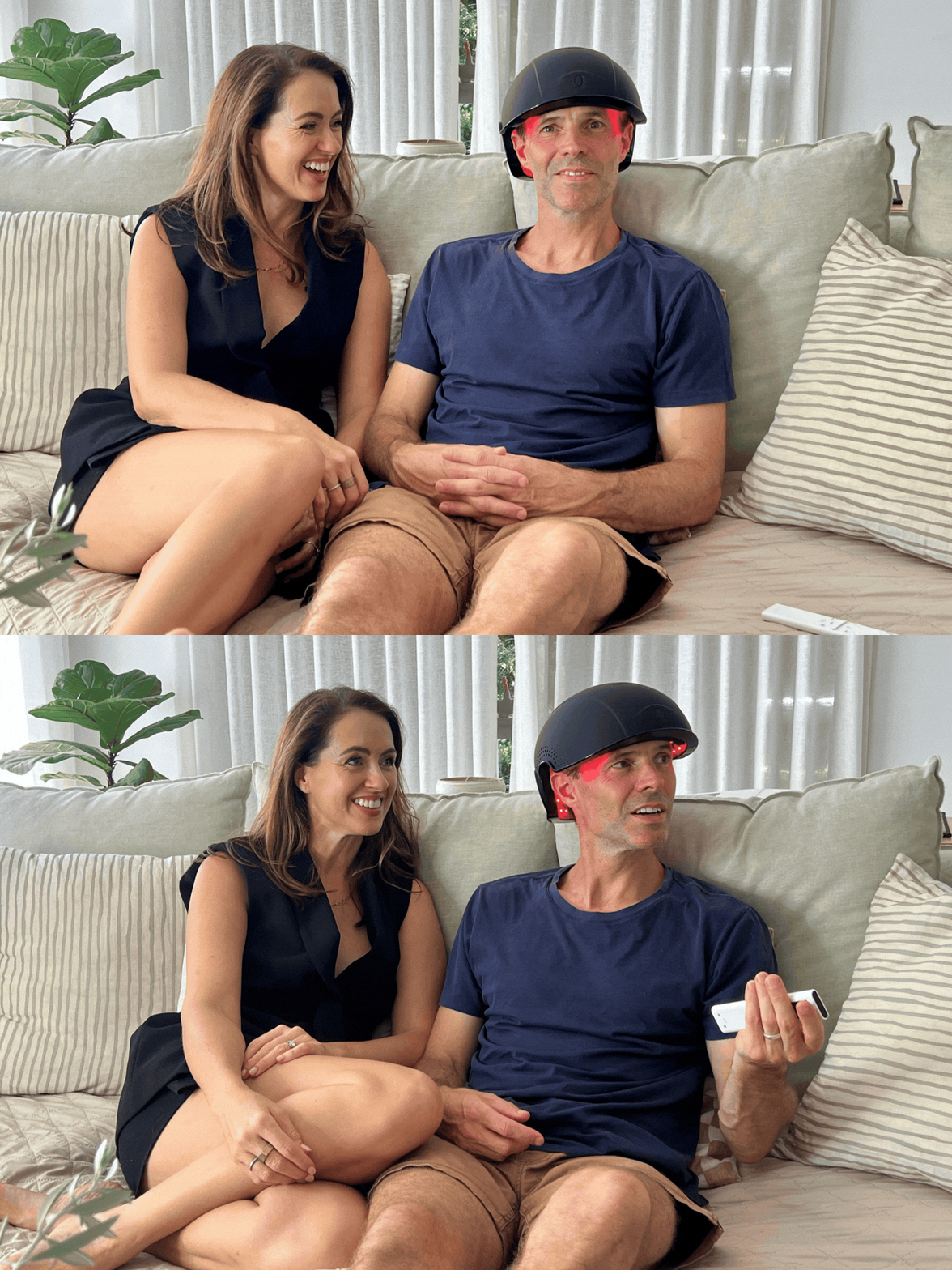
Damien isn't changing anything else.
He already uses finasteride and minoxidil most days, both designed to slow hair loss rather than guarantee regrowth. Does he notice obvious new hair from them? Honestly, he's not sure – which is very normal.
No new supplements. No stopping existing treatments. The helmet is simply added in.
That mirrors real life far better than a perfectly controlled lab scenario.
We'll follow the same 16-week timeframe used in the study as our first checkpoint, with consistent photos and routine.
Hair is slow. If skincare is a four-week creature, hair is a 16–26 week animal. That's how long follicles take to cycle and produce visible change. Patience is part of the process.
He also delivers several Star Wars references in a disturbingly accurate Darth Vader voice whenever he puts it on – which feels like a small but meaningful bonus.
Why I'm Using It Too
The study focused on people with mild to moderate thinning. But the thickness data made me curious beyond that group.
If a device can help existing hair fibres look more substantial over time, that matters to almost anyone noticing changes with age, stress, hormones or postpartum shifts.
I'm using it when I can – not as a declaration of belief, but as a practical extension of the same red light logic we already apply to skin and recovery.
Where I Land, For Now
I'm not interested in miracle narratives.
I am interested in well-designed devices, human data and realistic outcomes.
Based on what I've read so far, Q-Renew earns a place in the conversation because:
- The study shows statistically significant improvements in hair thickness and growth indicators
- The claims stay within those bounds
- The device is easy enough to use that consistency is actually plausible
Red light therapy didn't explode because of one product or one study. It crept in slowly, attaching itself to our desire for optimisation, convenience and feeling proactive without feeling overwhelmed.
The hair helmet feels like the next logical chapter.
Not a miracle. Not a promise. Just a thoughtfully engineered option in an increasingly crowded hair loss landscape.
We'll report back after 16 weeks. Calmly. Honestly. Without hype.
Written by Sigourney and Damien Cantelo in partnership with Qure
Shop the Edit