
There's a point in almost every beauty routine when two apparently similar tools start staring back at you from the bathroom cupboard. Both are round. Both get hot. Both promise bounce. Yet use the wrong one at the wrong moment and you may be left wondering whether you missed an important meeting where everybody else learned how to do hair.
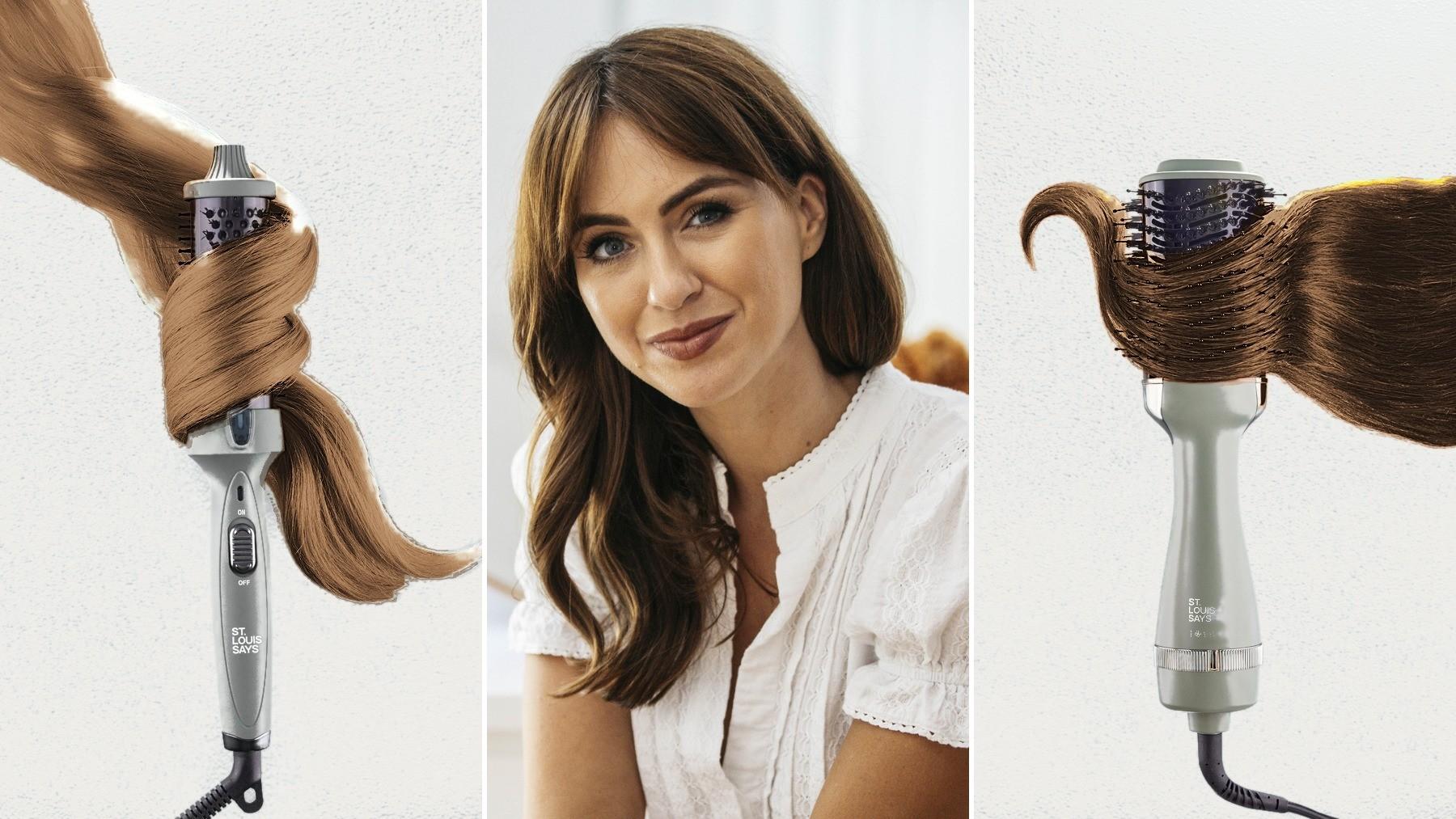
That was roughly my level of expertise when I tried the St. Louis Says Infrared Thermal Brush. My fine hair was frizzy and shapeless and I hadn't really styled it beforehand. Afterwards, it looked instantly smoother and distinctly more groomed. Pretty good, actually.
What impressed me was the smoothing. Hair I hadn't really done anything with suddenly looked as though I had. A small distinction, perhaps, until you're the person looking in the mirror.
Thermal brush vs blow-dry brush: what is the difference?
St. Louis Says makes both, and the two look like close relatives with completely different jobs. One is for damp hair. The other is for dry hair. Once you understand that, the whole category becomes much less mysterious.
The dry-hair tool
Infrared Thermal Brush
- Hair state: completely dry hair only
- Barrel: 45mm
- Heat: adjustable, 160°C to 200°C
- Airflow: none, so it doesn't dry hair
- Best for: smoothing, polishing and restyling dry hair, day-two refreshes
The wash-day tool
Blowout Brush
- Hair state: damp, detangled hair
- Barrel: 75mm
- Heat: three heat and speed settings
- Power: 1200W professional drying power
- Type: hot-air brush with airflow, heat and dual bristles, a separate tool from the Thermal Brush
- Best for: drying and styling in one step, with lift and blow-dry movement
Think of the Blowout Brush as your hairdryer and round brush deciding to move in together. The Thermal Brush is more like a round brush and curling iron having a very polished child. They can create a similarly smooth, bouncy look, but they enter the routine at different doors.
"The simplest rule is wet or dry. If your hair's damp, reach for the Blowout Brush. If it's already dry and just needs some polish, that's the Thermal Brush's job."
Tim Persley, co-founder, St. Louis Says


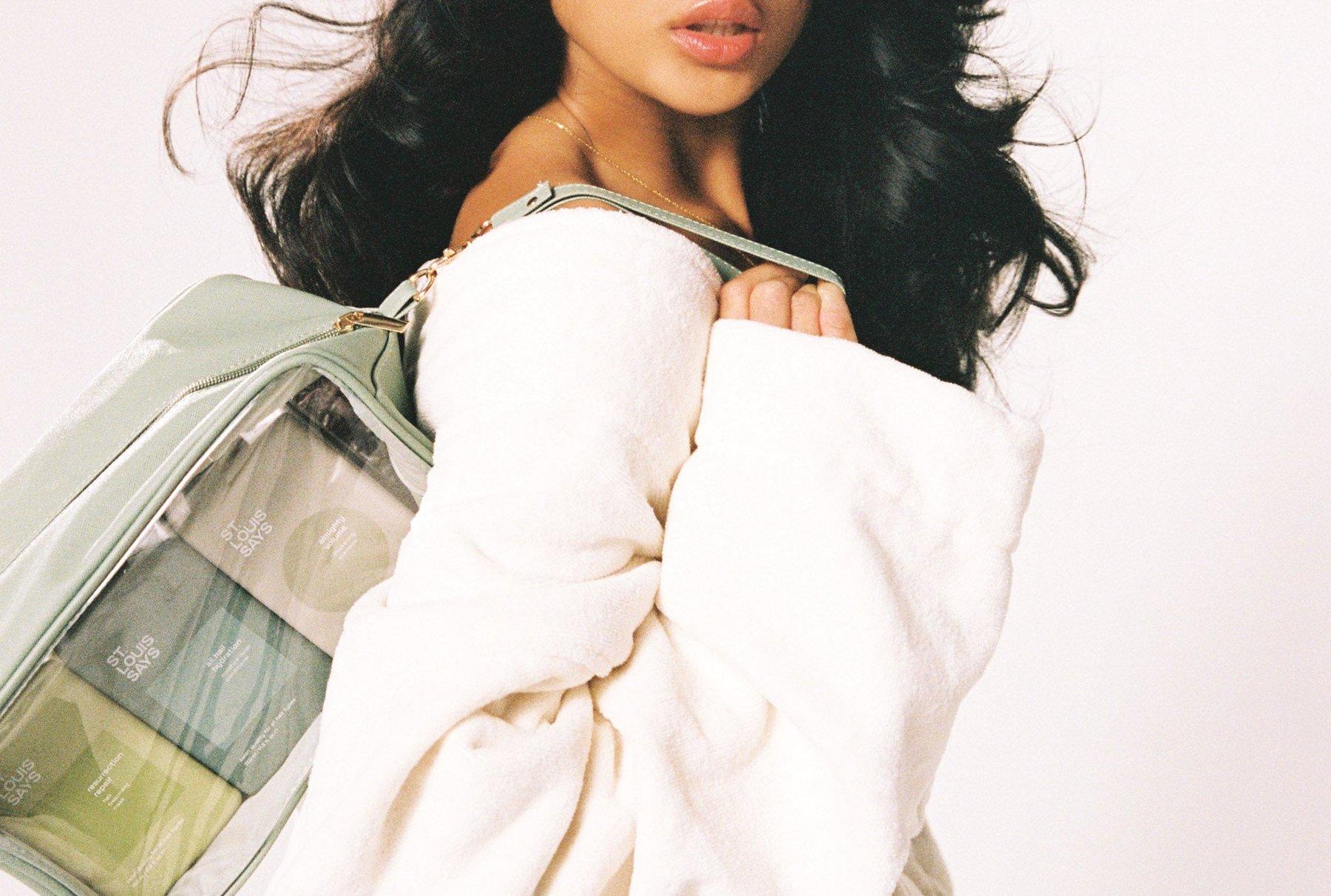
How do you use each brush?
When to use the Blowout Brush
Use the St. Louis Says Blowout Brush after washing, when your hair is damp, detangled and protected with a heat-protectant product.
St. Louis Says advises sliding the brush through combed hair until it's about 80 per cent dry, then rolling it at the roots and pulling it through with tension for volume. In practice, that means taking care of most of the drying before concentrating on the shape. Starting on soaking-wet hair would make the job longer and expose each section to more heat and mechanical pulling than necessary.
Work in sections that the bristles can comfortably control. Lift the brush away from the scalp if you want volume, then turn the ends under or away from the face depending on the finish you like. It can also be handy if coordinating a dryer in one hand and a round brush in the other makes you feel as though you've been accidentally entered in a circus audition.
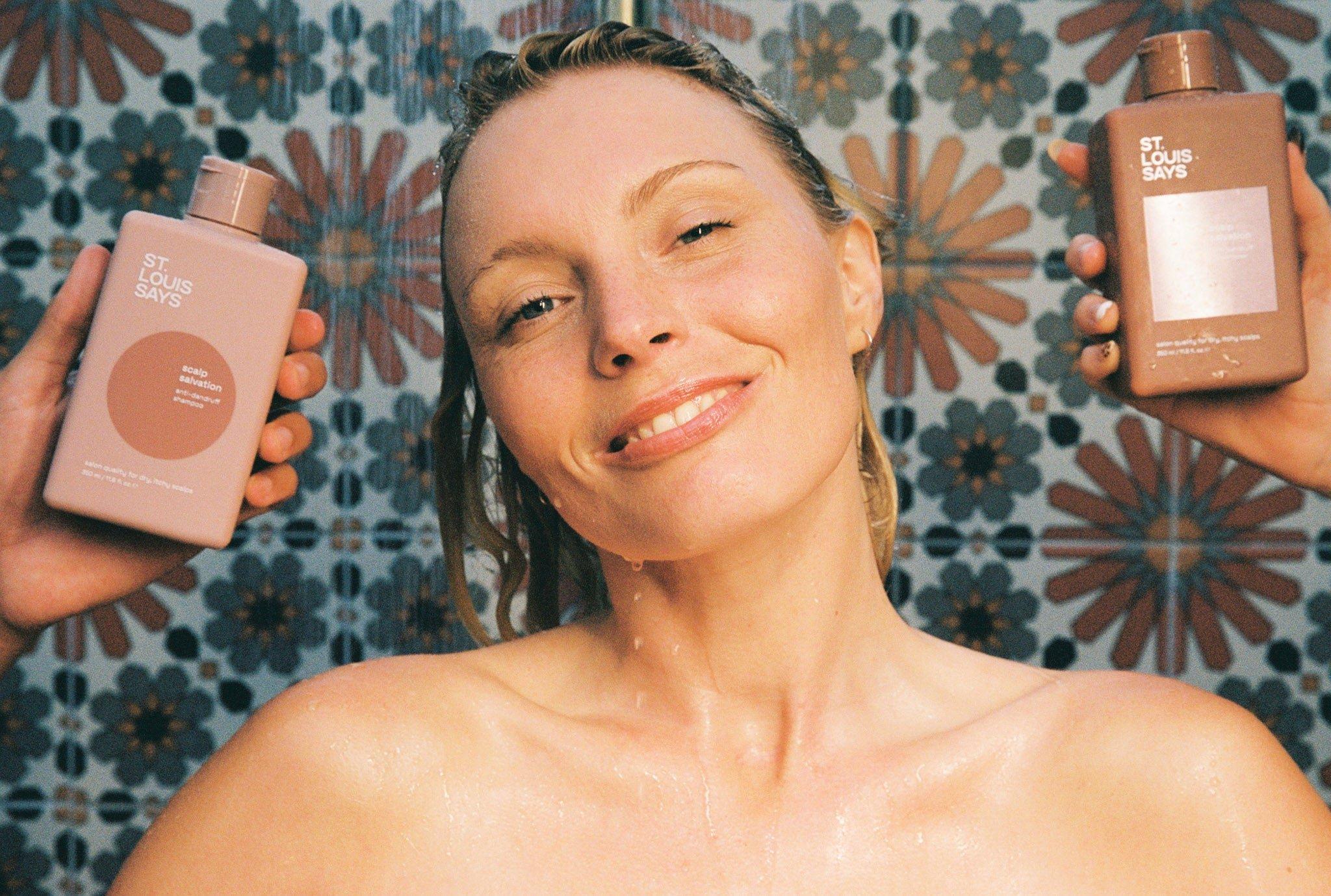
When to use the Infrared Thermal Brush
Use the St. Louis Says Infrared Thermal Brush only once your hair is completely dry.
It's designed for moments when your hair has dried with an odd bend, developed frizz overnight or simply needs to look more intentional. It can also be used after an ordinary blow-dry to add a broad curve through the ends or lift around the crown.
Apply a heat protectant suitable for dry hair, divide the hair into sections and begin at the lowest setting. Place the brush underneath a section if you want lift and shape or over it if smoothing is the priority. Pull through with gentle tension rather than clamping or lingering.
On my fine hair, its most obvious talent was turning shapelessness into polish. My hair simply looked as if somebody competent had been involved. That, for me, is the appeal. It's a finishing tool for people who want hair to look done without making an entire event of it.

Which brush suits your hair type?
Results vary with strand thickness, density, curl pattern, length, condition and technique, so there's no single best brush. These are the trade-offs as I see them.

Fine hair and low-density hair
Fine and low-density hair are often spoken about as though they are the same thing. They aren't. Strand diameter describes how fine each individual hair is. Density describes how many hairs are growing across the scalp. You can have fine strands and plenty of them, or coarse strands with lower density.
My own hair is fine, and the Thermal Brush gave it immediate smoothness. The lowest setting on this brush is 160°C, which is still substantial heat, and that minimum isn't a guarantee of suitability for fine or fragile hair. If your hair tolerates heated styling, follow the manufacturer's directions, keep the brush moving and use only as many passes as needed. Too much brushing can turn airy movement into flatness.
On wash day, the Blowout Brush makes more sense when drying and root lift need to happen together. The following day, the Thermal Brush can refresh the crown, front pieces and ends without wetting everything down and beginning again. For more on this, see our best hair tools for fine hair.
Thick, dense, curly or coily hair
Thick or high-density hair generally requires smaller sections, firmer tension and more patience. A 45mm barrel creates a broad bend, so very coarse or tightly textured hair may not become sleek in one pass. That's not necessarily a failure. It may create a softer stretched finish rather than the glassy result of an iron, and dense hair takes more time.
On curly or coily hair, decide first whether you want to preserve the curl pattern. If the answer is yes, neither of these is the obvious everyday tool, and a diffuser and curl-specific routine will be better aligned with that goal. If you want to stretch and smooth, the Blowout Brush belongs at the damp stage and the Thermal Brush only after the hair is fully dry, with careful detangling, small sections and controlled tension. The exact St. Louis Says tools haven't been independently tested across every curl pattern, so "suitable for everyone" is better treated as a possibility than a guarantee of the same result.
Short hair
The 45mm barrel is best suited to creating broad movement and may be less manoeuvrable on pixies, very short layers or a short fringe. For those lengths a small-barrel tool or a professional blow-dry will usually serve you better.
Coloured, bleached or damaged hair
Bleaching and other chemical treatments can lift and weaken the hair's protective cuticle, increasing porosity and reducing strength. Hair that already feels fragile deserves a lower setting, fewer passes and less tension, along with heat protection every time.
I wouldn't choose a temperature based only on how thick the hair looks. A dense head of bleached hair may still contain highly vulnerable fibres. Start low, test a discreet section and stop once the shape is there. If you're unsure, ask your hairdresser. Neither tool repairs existing damage.
What does the infrared in a thermal brush actually do?
This is where beauty terminology can float rather too close to the clouds.
St. Louis Says describes the brush as using far infrared technology for lower-heat styling, with negative ions for smoothing and moisturising. What the brand does publish is a temperature range of 160°C to 200°C, a 45mm barrel and instructions to start low and increase only if needed. It doesn't currently publish a wavelength, light dose, measured barrel-surface temperature or comparative study showing less hair damage than a conventional thermal brush.
Far infrared is also not the same thing as visible red light or red-light therapy. Infrared sits beyond the red end of the visible spectrum and is commonly experienced as heat. Red-light or photobiomodulation devices use specific wavelengths and doses, usually delivered repeatedly to the scalp over time. This brush is a styling tool and isn't presented with those specifications, so I wouldn't connect it with hair growth, follicle stimulation or cellular repair.
Its real-world difference is more straightforward. It gives you heated styling in the familiar shape of a large round brush. The bristles help organise the hair while the barrel creates a broad bend, rather than sandwiching strands flat between two plates. Whether infrared itself produces a gentler result than another well-designed thermal brush remains a brand claim rather than something independently established.
Is 160°C really low heat?
It's the lowest setting on this brush, but it's still proper heat. Research on hair fibres shows that rising temperatures and repeated exposure can damage the cuticle and eventually alter the hair's structure. Those laboratory studies don't recreate every detail of brushing at home, but the basic lesson is sound: use the lowest setting that works, keep the brush moving and avoid going over the same section simply because you've become hypnotised by the shine.
"We always say start at the lowest setting and keep the brush moving. Most people are surprised how little heat they actually need for a smooth finish."
Adrian Mezzina, co-founder, St. Louis Says
Infrared doesn't make hair immune to heat. A heat protectant, complete dryness, moderate tension and fewer passes remain the useful rules.
Who is behind St. Louis Says?
Part of the reason I was curious about these tools is that I love finding Australian brands with a distinct point of view.

St. Louis Says was founded by long-time friends Adrian Mezzina and Tim Persley. The pair came from hospitality marketing and opened Twin Palms on James Street in Brisbane in 2017, creating a modern barbershop built as much around atmosphere and connection as the haircut itself.
St. Louis Says grew from that world. Their aim was to make salon-style haircare feel elevated and beautifully designed without drifting into rarefied pricing. The wider range now spans hydration, volume, scalp care, conditioning and styling, with the haircare formulas produced at the brand's Sunshine Coast facility.
Adrian told me how the brushes came about:
"For us it's always been about extending the St. Louis Says experience beyond the shower. Great haircare gets you most of the way, but the finish is where you really feel it. These two brushes are just the beginning: one for wash day, one for every day after."
Adrian Mezzina, co-founder, St. Louis Says
There's a sense of theatre to it all. The brand speaks in blessings, halos and hair heaven. Thankfully, underneath the cherubs is a rather practical idea: make the routine easier and make the bathroom shelf look good while you are doing it. Our shop page for the brand has the wider range.
What haircare should go with heated styling?
Conditioning can improve softness, lubrication and manageability, but it can't return a damaged fibre to virgin hair. The St. Louis Says Resurrection Repair Hair Treatment Mask has a conditioning base that, according to the brand's ingredient list, includes cetearyl alcohol, behentrimonium chloride, glycerin, polyquaterniums, hydrolysed quinoa and several plant oils. On paper, that makes it a logical wash-day companion for dry or rough lengths.
That formulation alone doesn't tell us how it will perform on every head of hair. Nor is a conditioning mask a replacement for heat protectant, and it doesn't make repeated high-temperature styling risk-free. Think of the mask as conditioning the canvas and the protectant as preparation for the particular styling session.
Do you need both brushes?
Not necessarily.
Choose the Blowout Brush if your main problem occurs after washing. It's the more logical tool if you want to dry damp hair, lift the roots and create a rounded blowout in one routine.
Choose the Infrared Thermal Brush if your hair is already dry but tends to look frizzy, flat, bent or unfinished. It's especially appealing if you dislike the very straight finish of an iron and want broader movement through the ends.
Choose both if you regularly style on wash day and then revive the result between washes. The Blowout Brush creates the foundation. The Thermal Brush edits it later. For me, the appeal was how quickly the Thermal Brush made my unstyled fine hair look groomed. Frizzy and shapeless became smoother and more polished. And that may be the real miracle.
"On wash day the Blowout Brush does the heavy lifting. On day two or three, the Thermal Brush brings it back to life in a few minutes, with no rewash needed."
Tim Persley, co-founder, St. Louis Says


Both brushes are available through Beauticate for delivery within Australia.